
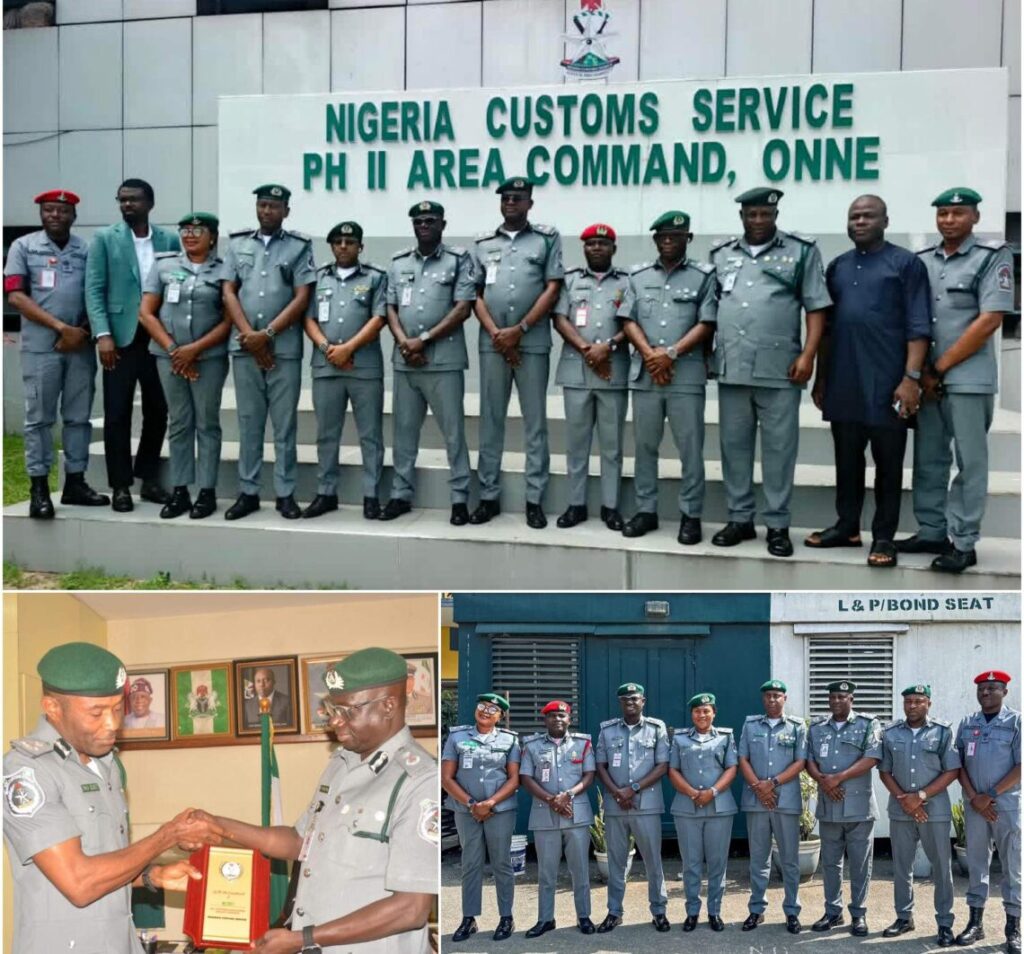
In a strategic move to tighten revenue protection and enhance anti-smuggling operations across Nigeria’s critical eastern corridor, the Acting Comptroller of the Nigeria Customs Service, Federal Operations Unit, Zone C, Owerri, Deputy Comptroller Farouk Nadaniya, has extended a hand of fellowship to Area Commands under the Zone.
Nadaniya, on October 14, 2026, embarked on a familiarization tour to key Customs formations within Zone C, including the Zone C Headquarters, Port Harcourt, Port Harcourt I Command, Ibeto Seaport Area 5 Command, Port Harcourt Area II Onne Command, and the Eastern Marine Command.
According to a statement by the Command’s Public Relations Officer, CSC R. Nche, the visit is part of his efforts to *”enhance operational coordination as well as effective service delivery.”*
The tour comes at a time when the Nigeria Customs Service is under increased pressure to meet revenue targets, suppress smuggling in the South-South and South-East, and enforce legitimate trade along one of the nation’s busiest maritime and land border corridors. Zone C covers the 11 states of the South-South and South-East, with Onne Port alone handling over 60 percent of Nigeria’s non-oil maritime trade volume.
During the visit, the Acting Comptroller used the opportunity to establish closer working relationships with the Area Controllers and their officers, soliciting their support and cooperation to drive the mandate of the Service.
Addressing officers, Nadaniya expressed gratitude to Almighty Allah for the opportunity to serve and appreciated the respective Area Controllers, officers and men for their warm reception and commitment to duty.
He, however, went beyond pleasantries to set a clear operational tone. He emphasized *”the importance of collective responsibility in combating smuggling, protecting government revenue and enforcing legitimate trade laws”* as essential for the unit and Area Commands to achieve the strategic objectives of the Nigeria Customs Service.
For business operators and importers using the eastern ports, the message of synergy is significant. In recent years, frictions between enforcement units and area commands have often led to delays, demurrage costs, and trade disruptions.
A unified enforcement approach is expected to reduce arbitrary seizures on the highways, improve intelligence sharing, and allow legitimate cargo to move faster while blocking illicit trade.
Nadaniya also *”solicited the continued support and cooperation extended to his predecessor,”* stressing that consolidating existing achievements will be crucial to address operational performance across the entire zone.
This call for continuity signals stability for stakeholders who rely on predictable Customs operations for planning imports through Onne, Port Harcourt, and the Eastern Marine waterways.
In response, the Area Controllers described the tour as one of its kind. They assured him of *”maintaining cordial working relationship based on mutual respect, professionalism, discipline and accountability.”*
They further encouraged him to keep the flag flying by keying effectively into the giant strides of the Comptroller-General of Customs, Bashir Adewale Adeniyi, MFR, towards advancing the Service.
They reaffirmed their unending and continuous support, noting that such collaboration will enhance operational efficiency and prayed for guidance, protection, good health and wisdom for him and officers of the Unit.
The engagement is seen by trade analysts as a practical step towards aligning field operations with the CGC’s reform agenda anchored on consolidation, collaboration and innovation.
The Acting Comptroller also disclosed that a just-concluded meeting with patrol team leaders of the Unit was geared at enforcing discipline on the roads — a frequent complaint by manufacturers and traders in the East.
He charged team leaders to *”display a high level of discipline, professionalism, vigilance and accountability in the discharge of their statutory responsibilities considering the importance of the Federal Operations Unit and its role in advancing the mandate of the service.”*
For the business community, this translates to fewer cases of unprofessional interception of goods already cleared at the ports, and more targeted, intelligence-driven anti-smuggling operations that protect local industries from unfair competition from smuggled rice, poultry, textiles and used vehicles.
With the Eastern Marine Command covering Nigeria’s extensive creeks and waterways prone to crude oil theft and smuggling, and Onne and Port Harcourt remaining critical gateways for industrial imports, the renewed fellowship is expected to improve border security while facilitating legitimate trade.
Industry watchers say if the renewed cordiality holds, Zone C could see improved seizure-to-facilitation ratio, higher revenue remittance in Q4 2026, and reduced cost of doing business for compliant traders across the zone.



0 Comments